


 Pirelli Cinturato Rosso Review (2026): Wet Grip, Comfort, Longevity, Sizes & NZ Pricing
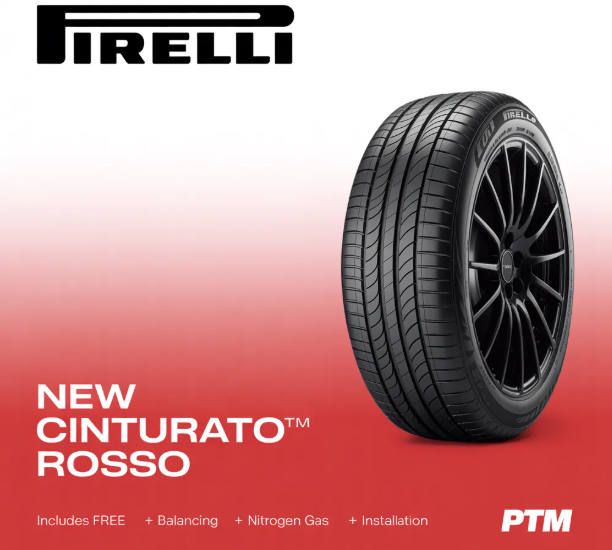
If you’re shopping in Auckland / New Zealand, the Pirelli Cinturato Rosso sits in that “comfort + safety” touring space: strong wet confidence, quieter ride, and decent mileage — built for everyday commuting and longer trips rather than hard-out sporty driving.
Below, you’ll find each section expanded with deeper insights, practical data, and clear, decision-focused detail to help you make an informed choice : what the design features actually mean on the road, what sizes are available, what NZ pricing looks like in 2026, and what your real fitted cost usually ends up being.
Wet and Dry Grip Performance
Pirelli positions the Cinturato Rosso as a tyre focused on comfort, grip in wet/dry, mileage, and low noise.
The 4 design features that matter (and what they do)
1) Fully grooved ribs (stability + smoother braking feel)
Pirelli describes “fully grooved ribs” that create “smooth force transitions” via side-to-side sipes, aimed at comfort and driving performance.
In real driving: this typically shows up as:
steadier straight-line tracking on motorways
less “on/off” harshness under braking
more predictable steering response in the wet
2) Scale-shaped rib with progressive stiffness (lower noise + steadier contact patch)
Pirelli calls out a “scale shaped rib” with a “progressive stiffness gradient… low noise emission.”
In practice: progressive stiffness is basically trying to keep the tread blocks from flexing too much (noise + heat) while still keeping enough compliance for grip.
3) Variable depth transversal grooves + 5 longitudinal channels (wet evacuation + hydroplaning resistance)
Pirelli highlights “variable depth transversal grooves & 5° longitudinal channel” for “high water evacuation with low aquaplaning risk.”
What that means on NZ roads:
better confidence on Auckland motorway grooves and standing water patches
less tendency for the steering to go “light” in heavy rain
generally more stable wet braking for a touring tyre
4) High shoulder curvature (braking footprint + even pressure)
Pirelli says the “high shoulder curvature” increases area during braking and improves uniform pressure distribution.
What you feel:
better bite when you hit the brakes firmly
less uneven wear if alignment and pressures are kept right
Dry grip reality check
This is not a “sports tyre.” Expect safe, stable dry grip and good braking feel for normal road use, but not the sharp turn-in or ultimate corner speed you’d get from a P Zero-type category.
Noise and Comfort (what “touring” feels like)
This tyre is built to be easy to live with — especially if your daily drive includes rough chipseal, motorway commuting, or long-distance travel.
Where the comfort comes from
From Pirelli’s own feature list, the two big comfort levers here are:
the rib structure designed for smoother transitions
the progressive stiffness rib aimed at reducing noise
What to expect inside the cabin
For most cars (sedans, SUVs, crossovers), “comfort + noise” improvements usually show up as:
less constant droning at 80–110 km/h
fewer sharp impacts transmitted through the wheel over small bumps
smoother feel when braking from motorway speeds
If you’re coming from a cheaper budget tyre, the difference can be obvious. If you’re coming from a top-end Michelin/Continental touring tyre, it’ll be closer — still good, but not always “class-leading.”
Longevity and Durability (how long they last, realistically)
Pirelli markets the Rosso as delivering “great mileage” as part of the core product goal.
Typical lifespan range (NZ context)
Actual tyre life depends heavily on:
alignment (toe wear kills tyres fast)
rotation habits (fronts wear quicker on many FWD cars)
driving style (hard braking/fast cornering = faster wear)
tyre pressure (low pressure = shoulder wear + heat)
For a touring tyre like this, a realistic expectation for many drivers is often 50,000–90,000 km depending on vehicle and usage. (Heavier SUVs and aggressive driving land lower; steady motorway driving lands higher.)
Durability notes (NZ roads)
NZ chipseal can be abrasive — it can shorten life compared to smoother asphalt countries.
If you do lots of rural roads, shoulder wear and chipping can become your limiting factor, not tread depth alone.
Hydroplaning Resistance (why the grooves matter)
Hydroplaning resistance is mainly about how quickly the tyre can move water out from under the contact patch.
Pirelli explicitly points to the variable grooves + five longitudinal channels as the feature for high water evacuation and reduced aquaplaning risk.
Simple “driver test” signs you’ll notice
steering stays heavier/more connected through standing water
less wandering on rutted wet motorways
more confidence braking in rain (still depends on ABS + following distance)
Snow / Ice Suitability (quick and blunt)
This is a summer touring tyre (not a winter or snow tyre).
For most of NZ that’s fine. But if you’re regularly in alpine conditions or ice/snow zones, you’d be looking at proper winter-rated options.
Sizes and Fitment Options (what sizes actually exist)
Pirelli’s catalogue shows Cinturato Rosso sizes across 15″ to 20″ and lists many common fitments (examples below).
Common sizes you’ll actually see in NZ
15-inch
185/65R15
195/65R15
16-inch205/55R16
215/60R16
17-inch225/45R17
225/55R17
18-inch225/55R18
235/50R18
19-inch225/45R19
235/50R19
(And many more in the catalogue list.)
Fitment tip (important): don’t just match width/diameter. Match:
tyre size
load index
speed rating
to what your placard/manual requires.
Pricing and Value in New Zealand (2026 data)
Tyre pricing in NZ varies a lot by size, stock availability, and promos.
Online pricing examples (NZD, per tyre)
Tyroola shows examples like:
205/55R16 91V: $288 each
225/55R18 98H: $346 each
Hyper Drive’s dealer-facing listing shows “Cinturato Rosso RRP: $139.99 inc GST” (likely for a specific small/entry size or promo structure, not a universal price for all sizes).
So: treat that as a starting-from reference, not “the” price.
What you’ll pay fitted in Auckland (typical “real bill”)
A realistic fitted total per tyre often becomes:
Tyre price + fitting/balancing + disposal + (optional) alignment
Hyper Drive’s site also shows tyre/wheel shipping costs (example: $16.99 per unit) if you’re ordering online.
If you’re buying online then installing locally, your all-in can swing a lot depending on:
installer labour rate
whether new valves are included
whether you add wheel alignment (often worth it if you’re replacing a full set)
Value: what you’re paying for
Based on Pirelli’s own positioning, the value proposition is:
touring comfort + low noise
wet/dry grip focus
mileage goal
So it makes the most sense if you care about:
wet commuting safety
low cabin noise
a more “premium” daily feel
Pros and Cons (expanded, practical)
Pros
Wet confidence focus via dedicated evacuation channel design
Comfort / noise design (progressive stiffness rib)
Wide size coverage across common NZ vehicles
Touring tyre “set and forget” vibe for commuting
Cons
Not a winter/snow solution (summer tyre category)
Pricing varies a lot by size (smaller sizes can look cheap; common 16–18″ sizes often aren’t)
If you want sporty steering feel, you may prefer a different category
Who This Tyre Is Best For (NZ buyer fit)
Best match
Auckland commuters (wet roads + motorway)
family SUVs and crossovers
anyone who wants quiet + comfort without going full budget tyre
Not the best match
drivers chasing sharp cornering feel / performance tyre behavior
snow/ice regulars (wrong category)
Final Thoughts (2026 takeaway)
The Cinturato Rosso is a comfort-first touring tyre that’s engineered around:
low noise
wet/dry grip
water evacuation / hydroplaning resistance
broad fitment coverage
In NZ pricing terms, you’re generally looking at mid-to-premium pricing depending on your size — for example $288 (205/55R16) and $346 (225/55R18) shown online.
If you tell me your exact tyre size (e.g., 215/55R17 94V) and vehicle, I can add:
a tight NZ price range for that size,
expected fitted total in Auckland,
and a quick “repair/replace style” value verdict vs 2–3 close alternatives in the same category.

- Pirelli Cinturato Rosso Review - February 13, 2026
- Pirelli Scorpion Verde Review - November 30, 2023
- Pirelli Scorpion Zero Asimmetrico Review - November 26, 2023